Quick answer
A ROSCA, or rotating savings and credit association, is a group of trusted people who contribute money on a set schedule. Each cycle, one member receives the full pot. ROSCAs are legal in Canada, used by millions of immigrants, and become a verifiable credit signal when run on Wiremi.
What is a ROSCA?
A ROSCA is a small group of people who agree to save money together on a recurring schedule. Each member contributes the same amount, on the same date, for the same number of cycles. Each cycle, one member receives the full pot of pooled contributions. The cycle continues until every member has had a turn.
There is no bank involved. There is no interest charged. There is no professional treasurer or licensed financial institution required. The mechanism predates modern banking by centuries and supports community wealth-building in every part of the world.
The term "ROSCA" was coined by economists studying these groups in the mid-twentieth century. The practice itself is much older than the academic label, and members rarely use the term in everyday conversation.
How does a ROSCA actually work?
Picture ten people who agree to a ten-month cycle, each contributing $500 per month. Month one, the first member receives $5,000. Month two, the second member. By month ten, every member has contributed $5,000 and received $5,000 once. The order of payouts is set up front, drawn by lot, chosen by need, or rotated by seniority.
The math is interest-free. Someone who receives early effectively got an interest-free advance from the group. Someone who receives late used the structure as forced savings. Across the full cycle, every member ends with the same net position, but each one used the same mechanism to suit a different financial moment.
Trust holds it together. Missing a contribution does not just disappoint the group; it ends your standing across an extended community of friends, family, faith network, or workplace.
What other names is a ROSCA known by?
The same structure has different names in different cultures. The map is wide.
In Africa:
- Cameroon: Njangi
- Nigeria: Ajo, Esusu, or Adashi
- Ghana: Susu
- Kenya, Tanzania, Uganda: Chama
- Senegal, Mali, francophone West Africa: Tontine
- South Africa: Stokvel
In Asia:
- Philippines: Paluwagan
- India, Pakistan, Bangladesh: Committee, Kameti, or BC (bachat committee)
- China and Chinese diaspora: Hui
- Vietnam: Ho or Hui
- Indonesia and Malaysia: Arisan
In the Americas and Caribbean:
- Mexico and Latin America: Tanda or Cundina
- Jamaica: Partner
- Trinidad and Tobago: Sou-sou
- Brazil: Consórcio (formalized variant)
The mechanism is the same. The name carries the culture.
Are ROSCAs legal in Canada?
Yes. Informal rotating savings have been legal in Canada for decades. Canadian law treats them as private agreements between consenting adults, similar to splitting a vacation bill, pooling money for a wedding gift, or running a workplace lottery pool.
The distinction worth understanding is this. A ROSCA is members rotating their own money. It is not a loan product, an investment fund, or a managed deposit. No one is selling securities. No one is licensed to take public deposits. The Canadian Securities Administrators and provincial financial regulators have no jurisdiction unless the group operates as something other than a traditional ROSCA.
The exception. If a group claims to pay interest, advertises returns to outsiders, charges members fees, or accepts contributions from the general public, the structure shifts away from a ROSCA into something the regulators may scrutinize.
Are ROSCA contributions taxed in Canada?
Generally, no. ROSCA payouts are not income because no member is earning more than they contribute over the full cycle.
When you receive the pot, you are receiving your own contributions plus interest-free advances from other members, all of which you repay through your remaining contributions. There is no profit to tax.
The Canada Revenue Agency treats this similarly to other rotating, non-interest-bearing private agreements. If your group's structure is non-traditional (such as paying interest to certain members, or admitting contributions from outsiders), the tax position can shift. Confirm with a Canadian accountant if your situation is complex.
What happens if someone in my group doesn't pay?
This is the traditional risk of an informal cash ROSCA. If a member misses a contribution after already receiving the pot, the group absorbs the loss. The defaulter loses social standing across the community, but there is no formal recovery mechanism.
This is exactly why ROSCAs have historically lived inside trusted communities only. Family, faith networks, workplaces, immigrant associations. People who cannot afford to lose social capital in the network they belong to.
On Wiremi, the failure mode is different. Contributions are collected by auto-debit on the agreed date. If a payment fails, the group is notified instantly and Wiremi works with the affected member to resolve it. The remaining pot is held in a verified ledger until the cycle's payout day, so no individual member can disappear with the funds mid-cycle.
How is Wiremi different from a traditional ROSCA?
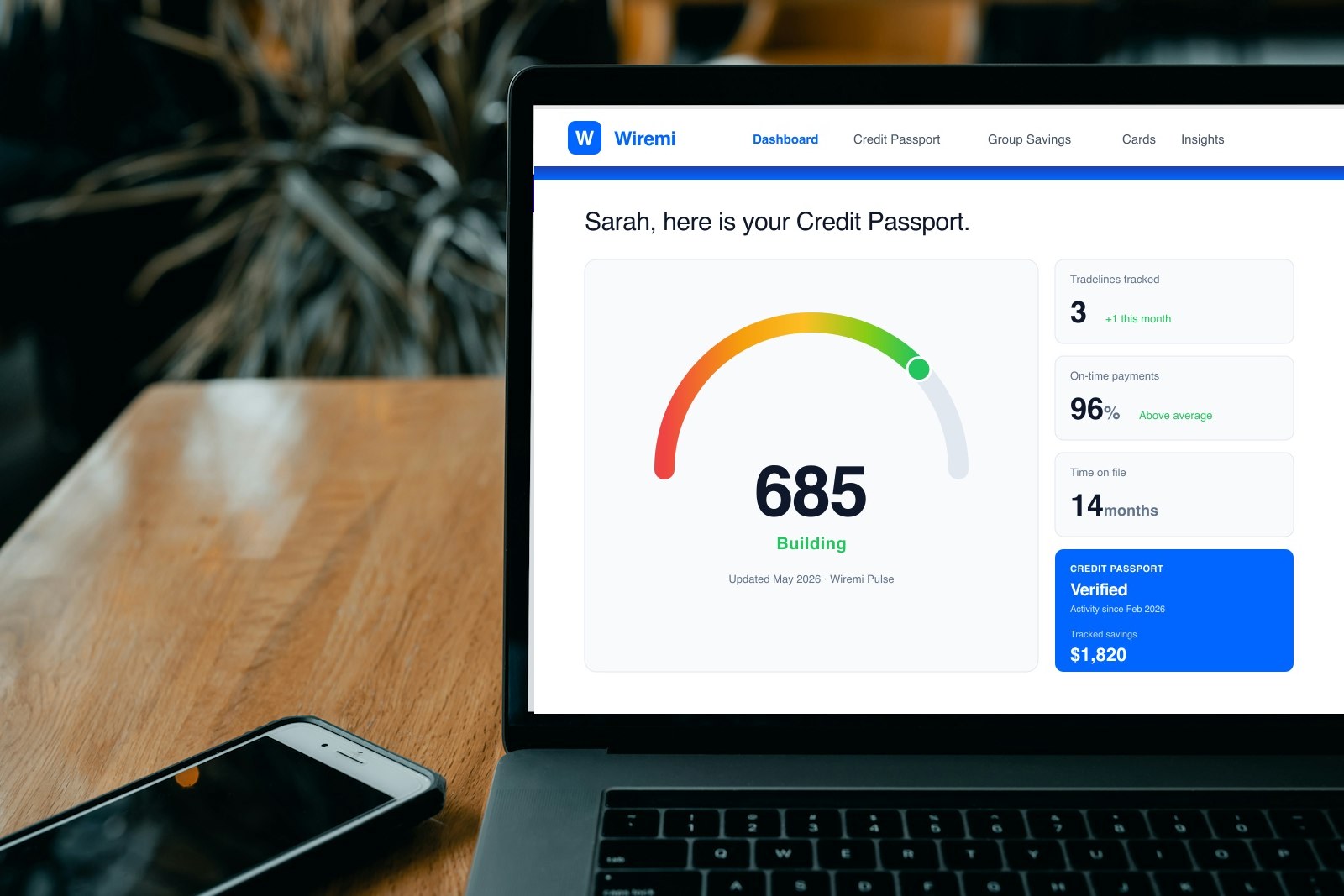
A traditional ROSCA depends entirely on personal trust and informal record-keeping. Wiremi runs the same mechanism on top of digital infrastructure. A verified-identity ledger records every contribution. Funds stay protected until payout day. Your participation becomes part of the Wiremi Passport, the portable financial profile Wiremi is building for newcomers and the diaspora.
The case for why bureaus should recognize this data is made in our manifesto on ROSCAs and credit history. This article is about understanding what a ROSCA is. The manifesto is about changing the financial system to recognize them.
How do I start or join a ROSCA on Wiremi?
Download Wiremi on iOS or Google Play. Inside Group Savings, you can join an existing circle by invitation or start a new circle of your own. Name the circle. Set the contribution amount and frequency, weekly, bi-weekly, or monthly. Invite members by Wiremi ID, phone, or email.
From there, Wiremi handles the auto-debits, rotation, and notifications. If you already participate in an informal ROSCA, moving it onto Wiremi turns months of trust-based discipline into a verifiable record that builds your Wiremi Passport from cycle one.